
ASP 24 | The Latin American Experience in Gender Justice and Its Contribution to the Crimes Against Humanity Treaty Initiative
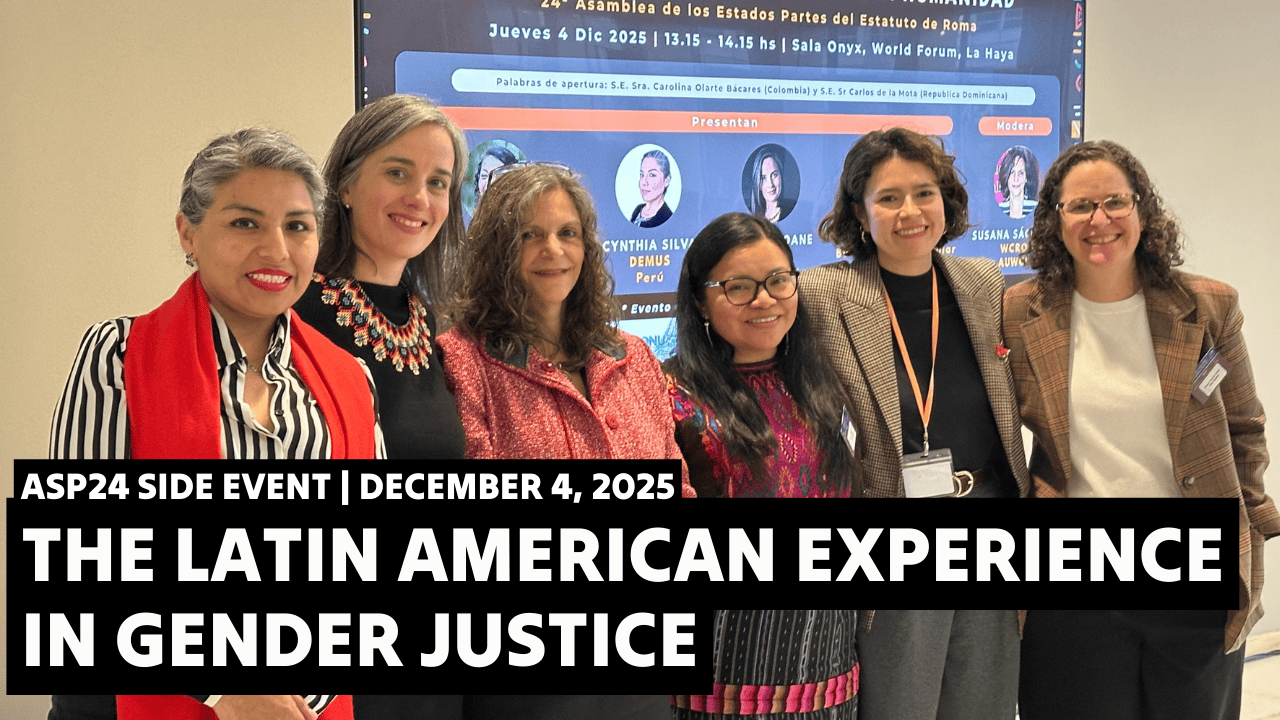
3 December 2025 — On 4 December 2025, during the Assembly of States Parties to the Rome Statute of the International Criminal Court (ASP24) in The Hague, the event “Latin American Experience in Gender Justice and Its Contribution to the Crimes Against Humanity Treaty Initiative” took place. The event provided a space for dialogue among experts in gender justice and strategic litigation from Colombia, Guatemala, Peru, and Argentina.
Drawing on concrete experiences of investigation and prosecution, the panel demonstrated how, in Latin America—contexts marked by protracted armed conflicts, crimes committed decades ago, and persistent legislative and normative challenges—justice systems, driven by human rights organizations, survivor networks, and feminist movements, have transformed the way gender-based crimes that may constitute international crimes are investigated, prosecuted, and sanctioned.
Key contributions from the discussion included:
- The application of gender, intersectional, ethnic, and territorial approaches in transitional justice and criminal proceedings, including the experience of Colombia’s Special Jurisdiction for Peace.
- The development of innovative evidentiary strategies to investigate sexual violence, reproductive violence, and other forms of gender-based violence, even decades after the crimes were committed.
- The importance of recognizing sexual and reproductive autonomy as a legally protected interest under international criminal law, beyond reductive approaches focused solely on bodily harm.
- The value of Indigenous peoples’ own legal systems and of an intercultural and decolonial perspective in the investigation of crimes against humanity.
- Latin American experience in attributing responsibility to senior leaders and organized power structures, including non-military actors.
At a critical moment in the process toward a Crimes Against Humanity Treaty -with preparatory meetings scheduled for 2026 and the first compiled text expected in April of that year- lessons from Latin America provide concrete guidance to prevent normative backsliding and strengthen a survivor-centered approach.
Incorporating these experiences into the negotiations will be essential to ensure that the future treaty reflects advances in gender justice and does not reproduce historical gaps.
You can rewatch a recording of the event here.
Espanol
El 4 de diciembre de 2025, en el marco de la Asamblea de Estados Partes del Estatuto de Roma de la Corte Penal Internacional #ASP 24 en La Haya, se llevó a cabo el evento “La experiencia latinoamericana en justicia de género y su aporte a la Iniciativa de Tratado sobre Crímenes de Lesa Humanidad”, un espacio de diálogo entre expertas en justicia de género y litigio estratégico de Colombia, Guatemala, Perú y Argentina.
A partir de experiencias concretas de investigación y juzgamiento, el panel mostró cómo, en América Latina, contextos marcados por conflictos armados de larga data, crímenes ocurridos hace décadas, y en dónde retos legislativos y normativos persisten, los sistemas de justicia en América Latina – impulsados por organizaciones de derechos humanos, redes de sobrevivientes y movimientos feministas – han transformado la forma en la que se aborda la investigación, enjuiciamiento y sanción de crímenes basados en género que pueden constituir crímenes internacionales.
Entre los aportes centrales del diálogo destacaron:
- La aplicación del enfoque de género, interseccional, étnico y territorial en procesos de justicia transicional y penal, incluida la experiencia de la Jurisdicción Especial para la Paz en Colombia.
- El desarrollo de estrategias probatorias innovadoras para investigar violencia sexual, violencia reproductiva y otras violencias basadas en género, incluso décadas después de los hechos.
- La importancia de reconocer la autonomía sexual y reproductiva como bien jurídico protegido por el derecho penal internacional, más allá de enfoques reduccionistas centrados únicamente en el daño corporal.
- El valor del derecho propio de los pueblos indígenas y de una mirada intercultural y decolonial en la investigación de crímenes de lesa humanidad.
- La experiencia latinoamericana en la atribución de responsabilidad a altos mandos y a aparatos organizados de poder, incluidos aquellos no militares.
En un momento clave del proceso hacia un Tratado sobre Crímenes de Lesa Humanidad – con reuniones preparatorias previstas para 2026 y la presentación del primer texto compilado en abril de ese año-, las lecciones provenientes de América Latina ofrecen insumos concretos para evitar retrocesos normativos y fortalecer un enfoque centrado en las víctimas/sobrevivientes.
Incorporar estas experiencias en las negociaciones será fundamental para que el futuro tratado refleje los avances logrados en materia de justicia de género y no reproduzca vacíos históricos.
Se puede ver una grabación del evento aquí.