
Strengthening Practitioner Connections in ICL | Gender Justice In International Criminal Law Conference 2025
-
Practitioner networks help translate gender justice into operational practices, providing important infrastructure for peer learning, rapid deployment of expertise, and survivor-centred approaches. Yet they remain fragmented and resource-constrained.
-
National-level practitioners, especially prosecutors and investigators, require sustained, practice-oriented support to advance accountability for conflict-related sexual violence, with meaningful connections dependent on trust, accessibility, and long-term institutional investment over ad-hoc convenings.
-
Decolonial and intersectional approaches require shifting agenda-setting power toward practitioners and communities most affected by conflict and systemic harm.
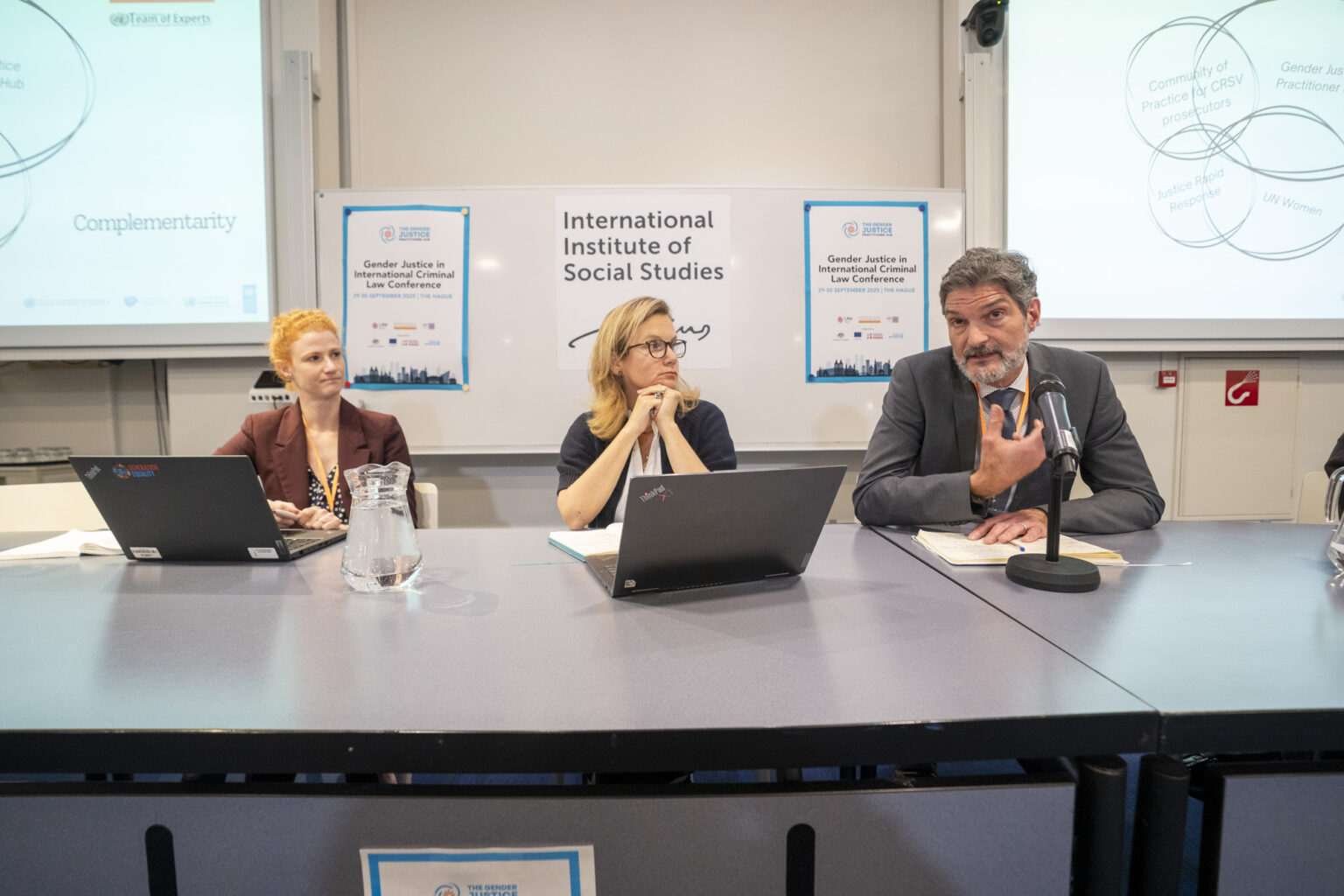
The Hague, September 29, 2025 – This panel focused on how practitioner networks can be strengthened to support collaboration, problem-solving, and solidarity in international criminal law (ICL), with particular attention to advancing gender-responsive and survivor-centred justice. Moderated by ISS PHD Candidate Thandiwe Matthews, the discussion emphasized bridging the gap between normative commitments and operational practice.
UN Women Rule of Law and Transitional Justice Policy Specialist Emily Kenney outlined the UN Women–UNDP Gender Justice Platform as a global framework supporting gender-responsive rule of law, transitional justice, and institutional reform. She highlighted the platform’s role in supporting national justice actors, survivors, and civil society across conflict and post-conflict contexts, while also contributing to normative development through policy guidance and practitioner-focused tools. Kenney underscored the importance of sustained engagement with women’s movements and country-level actors, particularly at a time of institutional restructuring within the UN system.
UN Team of Experts on the Rule of Law and Sexual Violence in Conflict Team Leader Chloe Marnay Baszanger described the work of the UN Team of Experts on the Rule of Law and Sexual Violence in Conflict, emphasizing efforts to address fragmentation among practitioners through the development of a prosecutor-led community of practice. She highlighted a new initiative to create shared infrastructure, including practice-oriented resources, jurisprudence databases, and secure peer-exchange spaces, to support national prosecutors pursuing accountability for conflict-related sexual violence, particularly as international justice mechanisms face growing political pressure.
Justice Rapid Response (JRR) Director Samuel Emonet presented the work of JRR, focusing on its roster of specialized experts and its community of practice for gender and sexual-violence investigators. He emphasized the value of practitioner-driven knowledge exchange, intersectional investigation methodologies, and deploying expertise rooted in lived experience of conflict. Emonet noted both the impact of these networks and the limits imposed by resources, calling for stronger partnerships to expand and sustain practitioner connections. The panel concluded that strengthening practitioner networks is essential to maintaining momentum on gender justice in ICL, particularly in a context of institutional backlash, and requires long-term investment in inclusive, practitioner-led infrastructure.
“Intersectionality and decoloniality must influence how priorities are set, not just who is represented.” Thandiwe Matthews


