
Gender Sensitive Institution Building | Gender Justice In International Criminal Law Conference 2025
-
Sustainable gender justice requires embedding gender sensitivity and feminist values into institutional structures, leadership, and accountability mechanisms, not relying on individual champions alone.
-
Clear frameworks, measurable indicators, and leadership accountability are essential to prevent regression and tokenistic compliance. Institutional progress is fragile and easily undermined by funding pressures, leadership turnover, and resistance within “deep structures.”
-
National and international institutions face distinct but interconnected challenges in integrating gender analysis across all crimes, actors, and levels. Cultures of care, feminist accountability, and support for change agents are critical to retaining expertise and preventing burnout and attrition.
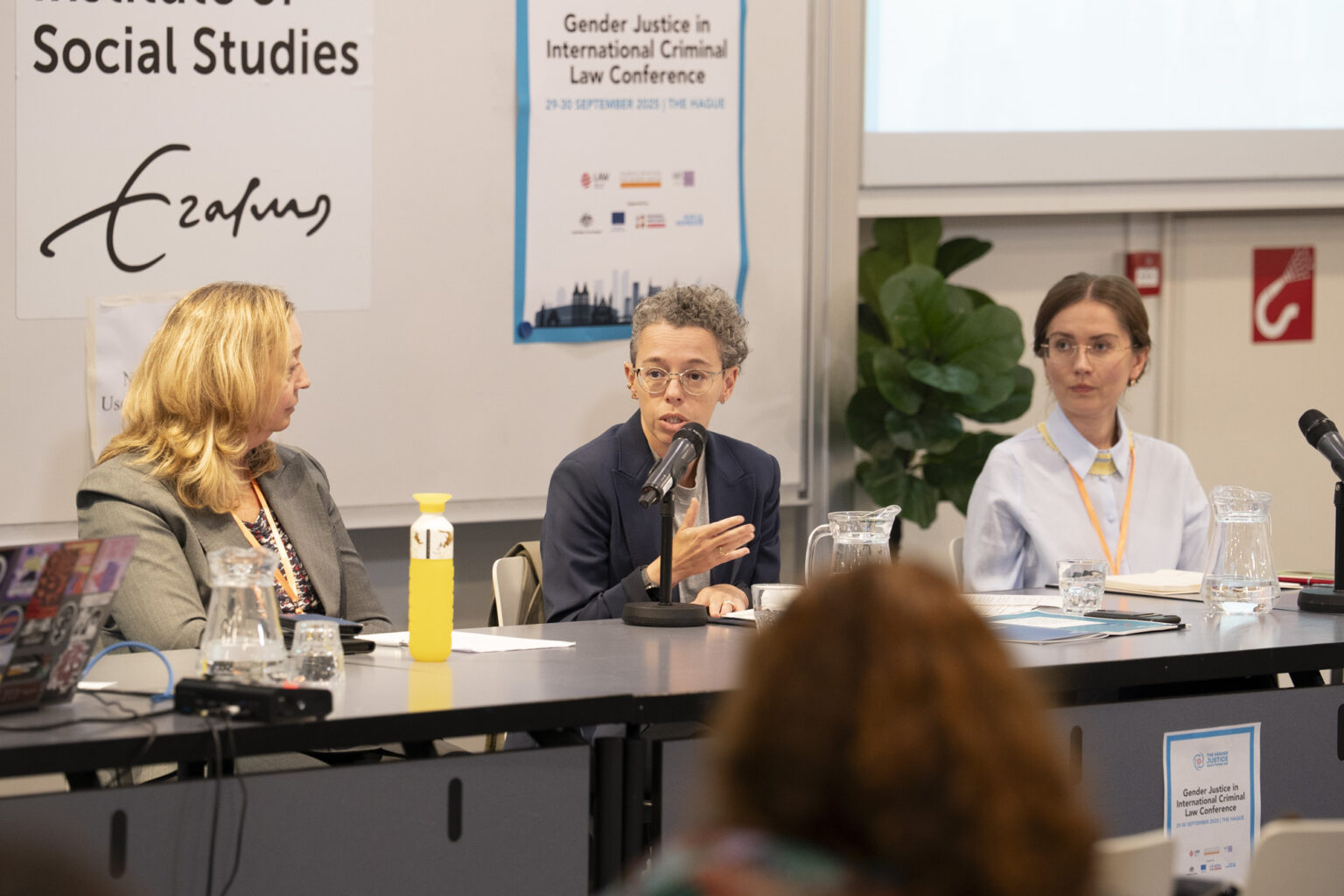
The Hague, September 29, 2025 – This panel examined how gender-sensitive institution building can be operationalized and sustained within accountability institutions, emphasizing that gender analysis cannot endure without structural embedding and leadership commitment.
Moderated by Michelle Jarvis, Deputy Head of IIIM-Syria, the discussion framed institutional design, culture, and accountability as decisive factors shaping justice outcomes. Katheryna Busol, Associate Professor at The National University of Kyiv-Mohyla Academy, reflected on Ukraine’s experience, highlighting early institutional gains catalysed by conflict-related sexual violence (CRSV) initiatives, including gender advisers across ministries and specialized prosecutorial units. She noted, however, persistent gaps in addressing gender dimensions of crimes beyond sexual violence, uneven attention to male survivors, and the risks associated with recent institutional restructuring. Busol underscored the need for coherent training across the criminal justice chain and better integration of medical, investigative, and judicial responses.
Antônia Pereira de Sousa, Chief of Office of the Registrar at the International Criminal Court presented the ICC’s internal gender equality and workplace culture strategy as an example of institutionalized gender architecture. She emphasized the importance of clear frameworks, leadership accountability, and measurable indicators, including KPIs, staff surveys, and independent evaluation. While noting tangible progress in gender balance and inclusive workplace policies, she stressed that sustaining momentum requires continuous monitoring and political will.
Alexandra Lily Kather, co-founder of Emergent Justice Collective, challenged institutions to confront the human cost of transformative work, particularly for those without formal authority. Drawing on feminist and decolonial perspectives, they argued for feminist leadership, everyday accountability practices, and cultures of care that address power, conflict, and harm within institutions. They emphasized embodiment, grief-tending, and collective care as necessary counterweights to extractive institutional cultures. Across contexts, panellists agreed that gender-sensitive institution building is not a technical add-on but a long-term political and ethical project requiring vigilance, solidarity, and imagination.
“Frameworks and accountability are what keep commitments alive when leadership changes.” — Antônia Pereira de Sousa


