
Gender Justice at the International Court of Justice | Gender Justice In International Criminal Law Conference 2025
-
Recent cases demonstrate that gendered harms, including sexual violence, reproductive violence, and gender apartheid, can and should be pleaded within existing legal frameworks.
-
Advisory opinions, while formally non-binding, can significantly advance gender-responsive interpretation through systemic integration of human rights, treaty law, and customary international law.
-
Inter-state litigation at the ICJ is increasingly central to addressing mass violations, yet gender issues remain inconsistently raised and unevenly addressed. Strategic state interventions, supported by civil society advocacy, can strengthen gender-sensitive interpretations without requiring doctrinal expansion.
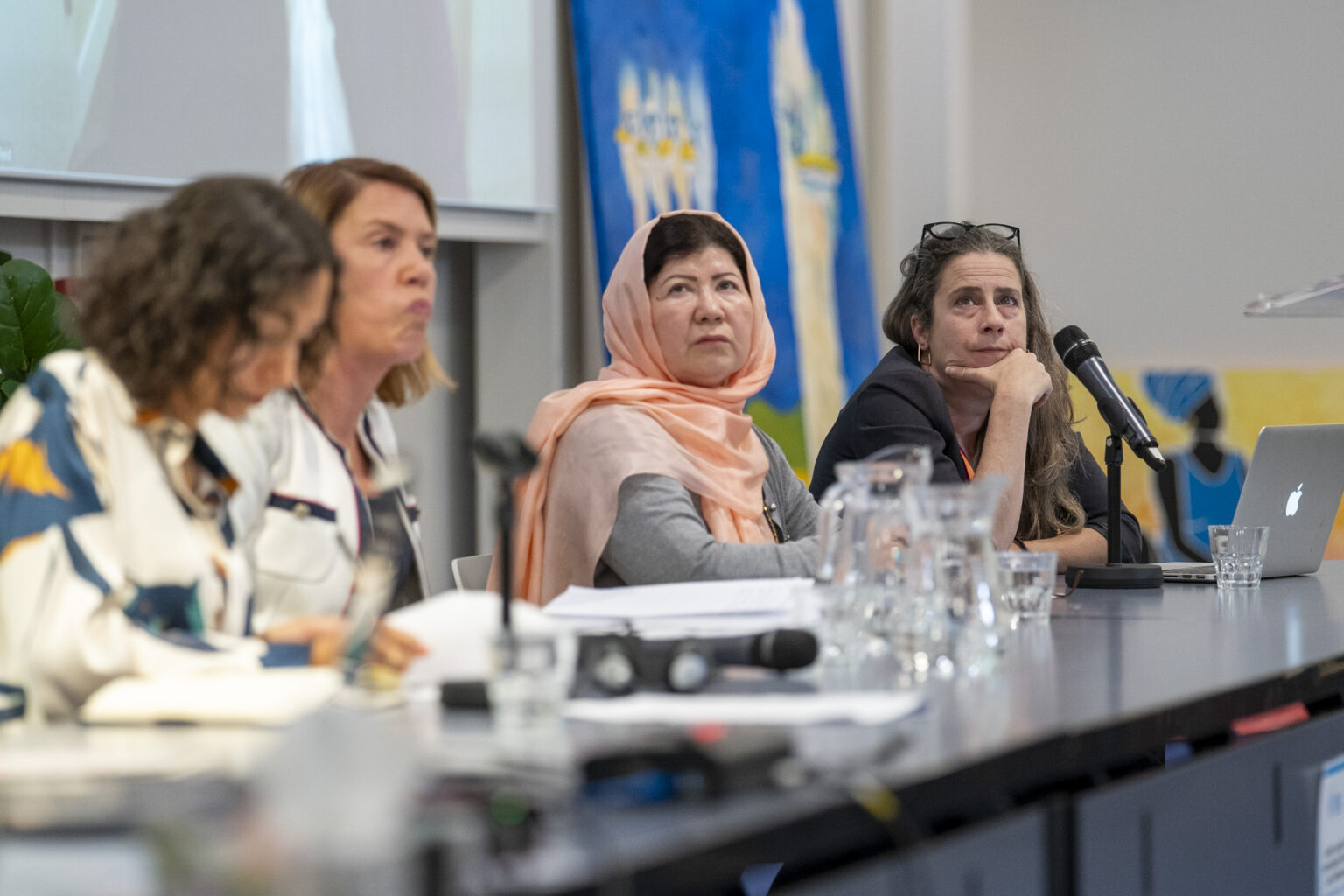
The Hague, September 30, 2025 – This panel examined how gender justice can be meaningfully advanced through proceedings before the International Court of Justice (ICJ), focusing on both contentious cases and advisory opinions.
Moderated by Erin Rosenberg, Senior Legal and Policy Advisor for the Mukwege Foundation’s Red Line Initiative and adjunct Professor at the Urban Morgan Institute for Human Rights at the University of Cincinnati College of Law, the discussion highlighted the growing relevance of the ICJ alongside persistent structural and procedural constraints.
Natalie Reid, Partner at Debevoise and Plimpton, reflected on the ICJ’s 2024 climate change advisory opinion as a landmark example of gender-responsive reasoning through systemic integration. She emphasized that the Court’s reliance on human rights law, CEDAW standards, and intersectional analysis demonstrated an evolving judicial openness to gendered impacts, even within generalized advisory findings. Reid also stressed that representation matters: increased participation by women and first-time advocates has shifted arguments from abstract third-person narratives toward lived experience.
Momina Yari, Deputy Director of the Afghanistan Organization for Development of Human Rights, addressed efforts to bring a case against Afghanistan under CEDAW, describing the Taliban’s policies as constituting gender apartheid. She outlined procedural and political obstacles, including jurisdictional hurdles and non-recognition, while underscoring the urgency of preventing normalization of systematic gender oppression. Yari emphasized that failure to pursue accountability risks entrenching impunity for gender-based crimes.
Antonia Mulvey, Founder and Executive Director of Legal Action Worldwide, focused on survivor engagement in ICJ proceedings, drawing on experience from The Gambia v. Myanmar. She highlighted the evidentiary weight of UN documentation, the importance of survivor presence, and the need to plan early for reparations, citizenship, and return of land as survivor priorities evolve over time.
From a state perspective, Palika Bhasin, Deputy Head of the International Law Team at the British Embassy in the Hague, explained the UK’s intervention strategy, emphasizing that gender-sensitive interpretations of the Genocide Convention reflect established law. She highlighted sexual and gender-based violence as integral to genocidal intent and stressed the decisive role of sustained civil society advocacy in shaping state engagement. The panel concluded that advancing gender justice at the ICJ requires deliberate pleading, survivor-centred strategies, and coordinated action between states, practitioners, and civil society.
“Gender-responsive interpretation does not require new law; it requires using existing law properly.” — Natalie Reid


