Strategizing to Support Emerging Justice Opportunities in Syria | Gender Justice In International Criminal Law Conference 2025
Event
September 30, 20255 min.
Syria presents a rare but fragile opportunity to advance accountability and transitional justice following the fall of the Assad regime, requiring urgent, coordinated support. Syrian women and feminist civil society have sustained justice efforts for over a decade and are central to shaping credible, survivor-centred transitional justice processes
Gender justice is not guaranteed in the current transition and faces risks from insecurity, ideological resistance, funding cuts, and lack of transparency.
Civil society-led coordination, codes of conduct, and survivor participation are critical safeguards against selective justice and politicisation. International support must be non-extractive, flexible, and aligned with Syrian-led priorities, while maintaining pressure against impunity for all perpetrators.
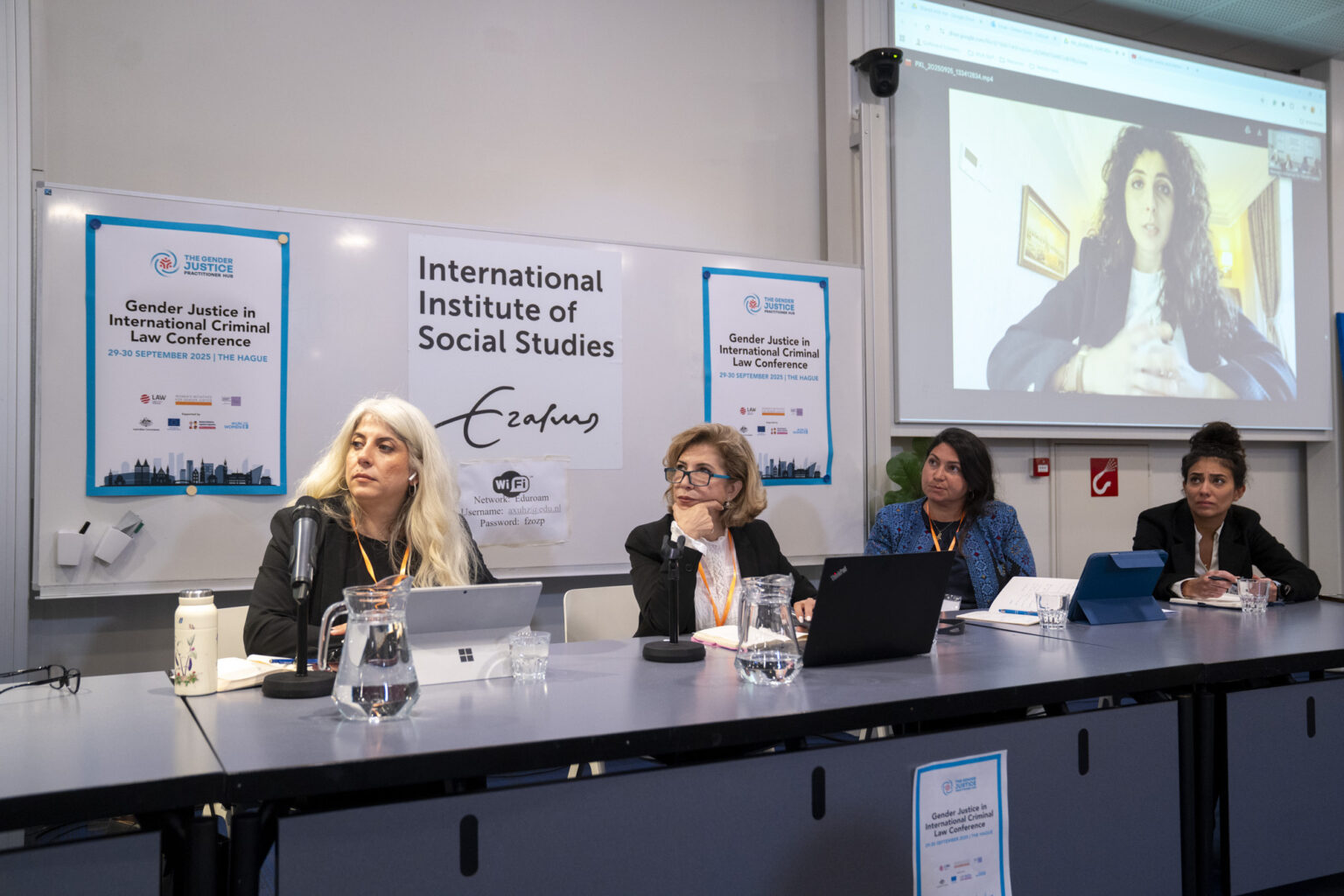
The Hague, September 30, 2025 – This panel examined how international and regional actors can support emerging justice opportunities in Syria while centring Syrian feminist leadership and survivor priorities. Moderated by Joumana Seif, Co-founder of the Syrian Feminist Lobby, the discussion situated current developments within the legacy of dictatorship, mass atrocities, and more than a decade of Syrian-led accountability efforts pursued despite blocked formal pathways. Panellists highlighted that Syrian civil society, particularly women-led organisations, has developed innovative legal, advocacy, and documentation strategies, including the use of universal jurisdiction cases in Europe.
Sana Kikhia, Executive Director of the Syrian Legal Development Programme, emphasised the need to adapt accountability strategies during this transitional phase, stressing coordination, flexibility, and women’s leadership as essential to remaining relevant to communities on the ground.
Razan Rashidi, Executive Director of The Syria Campaign,cautioned that women’s security and rights have deteriorated since the regime’s fall, underscoring that gender justice remains aspirational rather than assured. She outlined both the promise and limitations of newly established transitional justice bodies, warning against selective accountability, exclusion of victims of non-regime actors, and symbolic participation of women. Rashidi stressed that feminist civil society, survivor initiatives, and creative forms of mobilisation, such as art and digital campaigns, are vital to sustaining public demand for justice.
Sema Nasser, Director of Dar Justice and Mariana Karkouthly, Co-founder of Huquqyat, highlighted risks related to mandate clarity, independence, transparency, and trust-building. They emphasised that justice processes must address crimes committed by all parties, ensure meaningful participation of women and survivors, and avoid gatekeeping or re-traumatisation. European investigations, they noted, have benefited from feminist documentation that reveals gendered patterns of harm beyond conventional war crimes narratives.
Across the discussion, speakers stressed that transitional justice in Syria must be long-term, inclusive, and grounded in Syrian ownership, understood not as state control, but as accountability to survivors and communities. International actors were urged to provide sustained funding, technical support, and political backing without replicating extractive or depoliticising practices.
“This transitional phase demands that we rethink our tools, strategies, and partnerships to stay relevant to our people.” — Sana Kikhia