Reproductive Violence
Reproductive violence encompassess acts and omissions that directly or indirectly violate reproductive autonomy, understood as the capacity that all individuals have to decide whether to reproduce, when and with whom, and to access sexual and reproductive health information and services.
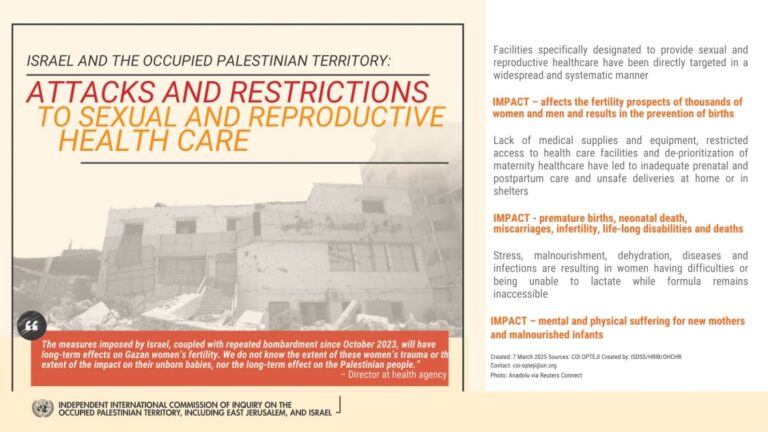
Forms of reproductive violence include forced abortion and contraception, prevention of births, interference with breastfeeding, forced sterilisation and forced pregnancy, destruction of reproductive healthcare or infrastructure, lack of institutional access to reproductive health services, including abortion services. It also includes torture or cruel, inhumane and degrading treatments that target reproductive capacity.
Reproductive violence and sexual violence can overlap. For example, in cases where a victim of rape that results in pregnancy is forced to carry the pregnancy to term. However, reproductive violence does not necessarily require sexualised contact, for example, in cases of forced contraception through pills and hormonal shots. There are also cases of sexualized violence that don’t involve violations of reproductive autonomy.
International Human Rights Law (IHRL) provides the legal basis for safeguarding the right of all persons to decide freely whether, when, and how often to reproduce.
The obligations are complemented by International Humanitarian Law (IHL) frameworks that protect dignity, life and health and prohibit discrimination and torture or any cruel, inhumane and degrading treatment. Furthermore, within International Criminal Law (ICL) various forms of reproductive violence can amount to international crimes under the Rome Statute, including
- forced pregnancy as a crime against humanity and a war crime (articles 7(1)(g); 8(2)(b)(xxii); 8(2)(e)(vi)),
- forced sterilisation as a crime against humanity and a war crime (7(1)(g), 8(2)(b)(xxii), 8(2)(e),
- and genocide by imposing measures intended to prevent births within national, ethnic, racial or a religious group (article 6(d)).
While conflict-related sexual violence has been widely documented and studied, reproductive violence remains underrecognised and overlooked, despite its prevalence in contexts of mass violence and armed conflict. WIGJ advocates for the recognition of reproductive violence as a distinct category of violence and harm, which allows a more comprehensive framework to capture the nuances and full gravity of these acts, contributing to accountability and appropriate reparation forms for them.
Why This Matters
The impacts of reproductive violence on victims, their families and communities are profound and interconnected. It can impact physical health, with some victims having permanent harm in their reproductive and sexual health as a result. It can lead to feelings of isolation and other mental health consequences, and it can impact victims’ family lives, intimacy with their partners and the fulfilment of their life project.
Holding perpetrators to account under the Rome Statute through the International Criminal Court as well as domestic and regional human rights/courts, strengthens the rule of law and sends the message that violations to reproductive autonomy can amount to an international crime.
Addressing reproductive violence as a distinct legal harm allows justice mechanisms to respond to violations of reproductive autonomy in a more precise and survivor-informed way. This supports accountability for perpetrators, recognition of victims’ experiences, and the design of reparations that respond to the specific physical, psychological, and social consequences of these violations.
What we do on Reproductive Violence
Legal Analysis and Research
Women’s Initiatives for Gender Justice conducts legal research and analysis to advance the recognition of reproductive violence as a distinct form of gender-based violence under international criminal, humanitarian, and human rights law. Our work focuses on clarifying legal definitions, evidentiary approaches, and accountability frameworks for violations of reproductive autonomy in contexts of armed conflict and mass violence.
We analyse how reproductive violence is addressed in international and domestic jurisprudence, with particular attention to forced contraception, forced abortion, forced pregnancy, and the denial or destruction of reproductive health care. This research supports more accurate legal characterisation of harm and strengthens the basis for charging, prosecution, and reparations.
Through public legal analysis, amicus submissions, and engagement with accountability mechanisms, we contribute to the development of legal standards that better reflect survivors’ experiences and support meaningful justice and redress for reproductive violence.
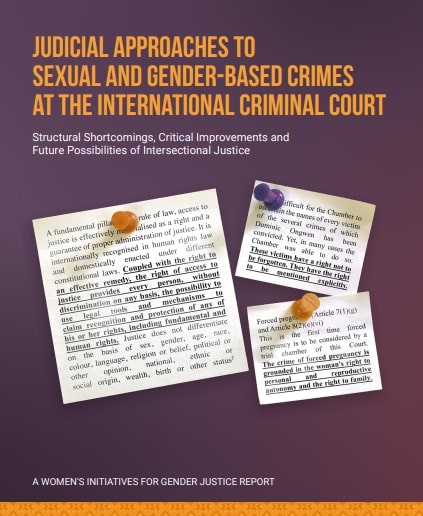
This work includes amicus submissions before domestic courts, legal analysis of transitional justice decisions recognising reproductive violence, and public advocacy calling for the International Criminal Court to explicitly charge reproductive violence in ongoing investigations.
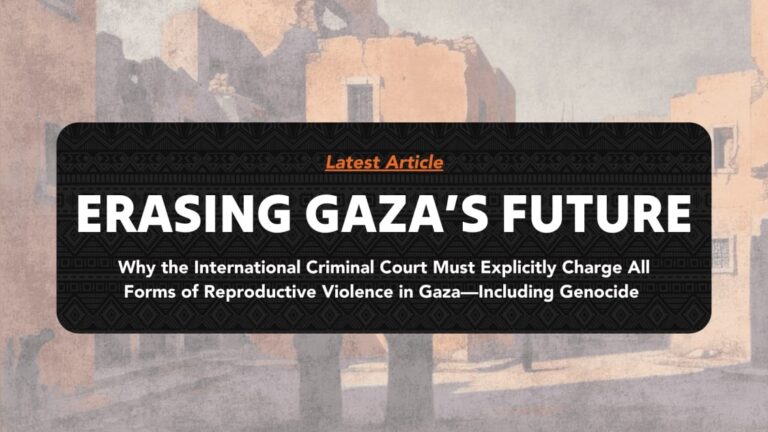
Erasing Gaza’s Future: Why the ICC must explicitly charge all forms of reproductive violence in Gaza — including as genocide
Advocacy & campaigns
We create spaces for legal debate, survivor-informed analysis, and knowledge exchange within international criminal law. Our work focuses on addressing gaps in legal recognition, strengthening accountability frameworks, and supporting approaches that reflect the lived realities of those affected by violations of reproductive autonomy.
In June 2024, we co-organised a conference on reproductive violence in international criminal law with the International Institute of Social Studies in The Hague, bringing together judges, lawyers, scholars, activists, and survivors from multiple regions. The discussions examined legal developments and challenges in recognising reproductive violence, including forced pregnancy and other violations, and reflected on emerging jurisprudence such as the Ongwen case before the International Criminal Court. Participants also shared country-specific experiences from contexts including Ukraine, Myanmar, and Colombia, highlighting both the impacts of reproductive violence and survivor-led strategies for justice and accountability.
We continue to integrate reproductive violence into broader advocacy on gender justice in international criminal law, including through panels and discussions at the Gender Justice and International Criminal Law Conference. These engagements explore how reproductive violence may constitute evidence of genocidal intent and emphasise the importance of intersectional and context-sensitive documentation for accountability.
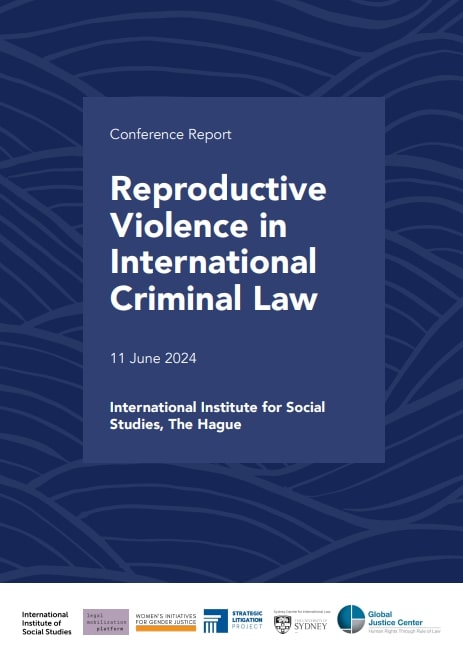
Reproductive Violence in International Criminal Law
Solidarity and Networkbuilding
Women’s Initiatives for Gender Justice acts as a central convening space for dialogue and collaboration on reproductive violence within international criminal law. We bring together survivors, feminist advocates, legal practitioners, scholars, and health and human rights experts to build shared understanding, develop legal analysis, and strengthen collective responses to violations of reproductive autonomy.
Through these networks, we support sustained attention to reproductive violence as a distinct and serious form of harm and work to advance more coherent legal approaches to accountability, reparations, and prevention. We will continue to expand this convening role, creating spaces for collaboration and standard-setting that support the recognition of reproductive violence within international justice frameworks.