ICL and the Continuum of Structural Discrimination | Gender Justice In International Criminal Law Conference 2025
Event
September 30, 20255 min.
Structural discrimination in international criminal law (ICL) is embedded in historical and contemporary systems of colonialism, racism, patriarchy, capitalism, and heteronormativity. Intersectionality provides a critical framework for understanding how overlapping systems of oppression shape both experiences of harm and access to justice.
ICL’s core crimes and institutional practices reflect hierarchies of harm that marginalize colonial, economic, racialized, and gendered violence. Decolonizing ICL requires shifting power toward survivors and communities, rethinking professional norms, and aligning legal strategies with broader liberation movements.
Gender persecution and gender apartheid offer emerging legal pathways to address systemic oppression, but significant gaps remain.
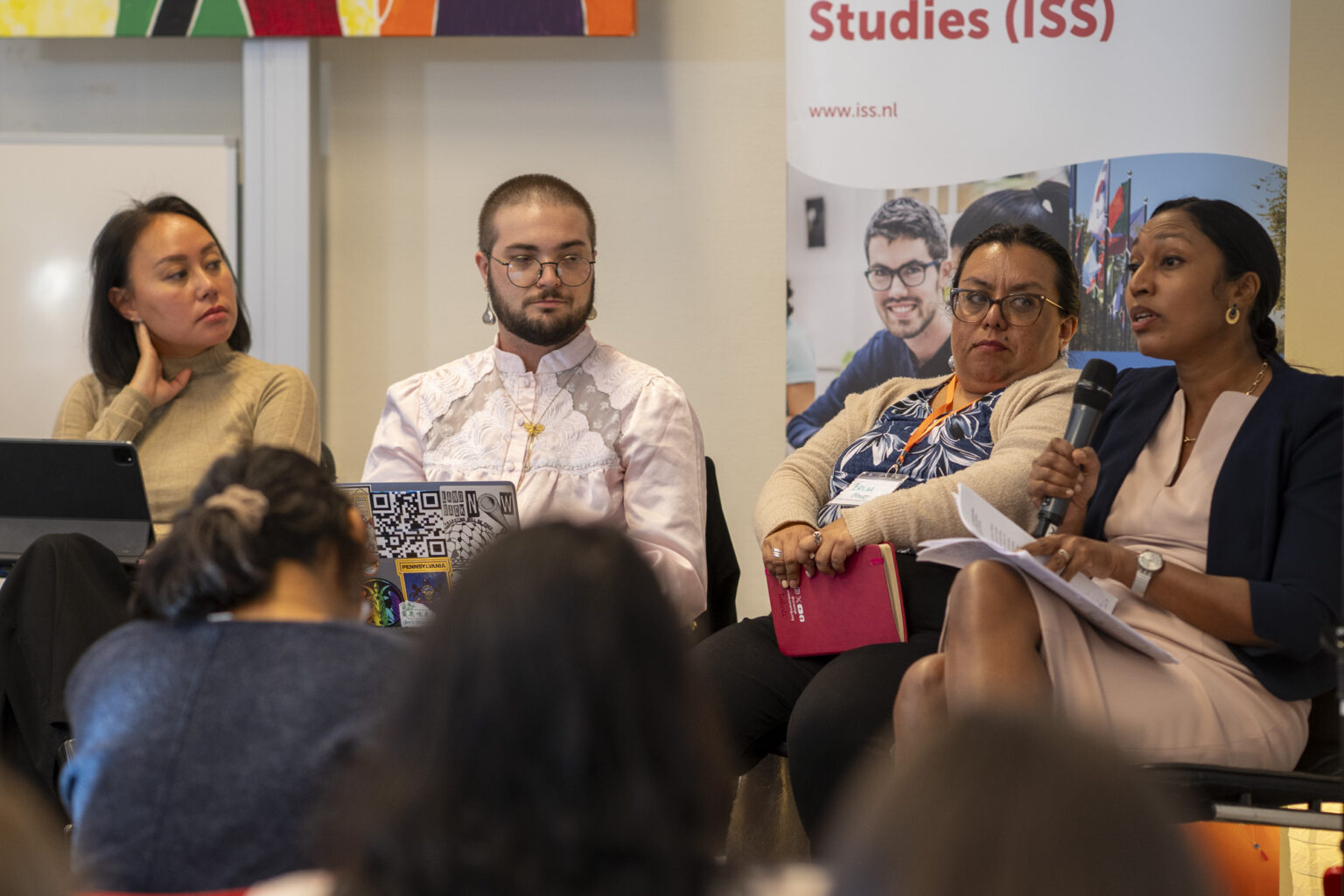
The Hague, September 30, 2025 – This panel examined how international criminal law engages with, yet often reproduces, structural discrimination across time, geography, and identity. Moderated by Akila Radhakrishnan, international legal expert, the discussion centred intersectionality as both an analytical framework and a practice grounded in humility, curiosity, and power awareness.
Priya Gopalan, international criminal lawyer and gender specialist traced the origins of intersectionality and demonstrated its relevance to ICL by examining militarized sexual slavery during the Second World War. She argued that gender-based harms cannot be understood in isolation from colonialism, racism, class, and militarism, and that intersectionality reveals forms of violence that fall through the cracks of single-axis legal analysis. Gopalan emphasized that ICL’s restrictive conception of violence and selective enforcement reflect deeper structural biases rooted in its colonial foundations.
Drawing on landmark cases from Guatemala, Brisna Caxaj, Gender Program Director at Impunity Watch, illustrated how patriarchal and racist legal systems shape both accountability processes and outcomes. While cases such as Sepur Zarco and the Maya Achi women’s cases represent important advances, she highlighted persistent barriers, including language, centralized courts, elite resistance, and attacks on judges and prosecutors. She underscored the transformative potential of strategic litigation, indigenous legal leadership, and reparations as tools to confront structural inequality.
Paxton McCausland, organizer, researcher and trans rights activist, focused on trans justice, stressing that international law contains underused tools, such as self-determination and gender recognition, that could meaningfully protect trans people. They highlighted legal gender recognition as central to dignity and survival, warned against reproductive violence through forced sterilization, and called for gender-competent courts and community-based approaches where formal justice fails.
Emilie Pradichit, Founder and Executive Director of Manushya Foundation, offered a decolonial critique of ICL, arguing that the field was built to protect empire rather than people. She stressed that survivors from the global south are too often treated as sources of testimony rather than agents of justice. Decolonizing ICL, she argued, requires naming colonialism as an ongoing structure, shifting power to frontline communities, rejecting extractive practices, and embedding solidarity grounded in difference, disagreement, and decolonial accountability. The panel concluded that confronting structural discrimination in ICL demands both legal reform and transformation of how practitioners work, fund, and build movements, recognizing that justice cannot be delivered through law alone.
“International criminal law was born colonial; and it still carries that DNA.” — Emilie Pradichit