
Repairing Gender-based Violence | Gender Justice In International Criminal Law Conference 2025
-
Reparative justice for gender-based violence must be survivor-centred, intersectional, and co-created, recognising that harm cannot be fully “repaired” but can be meaningfully addressed. Dignity, acknowledgement, and agency are often higher priorities for survivors than financial compensation alone.
-
Advisory opinions, while formally non-binding, can significantly advance gender-responsive interpretation through systemic integration of human rights, treaty law, and customary international law.
-
Survivor participation must go beyond testimony to include decision-making power, adequate support, and safeguards against extractive engagement.
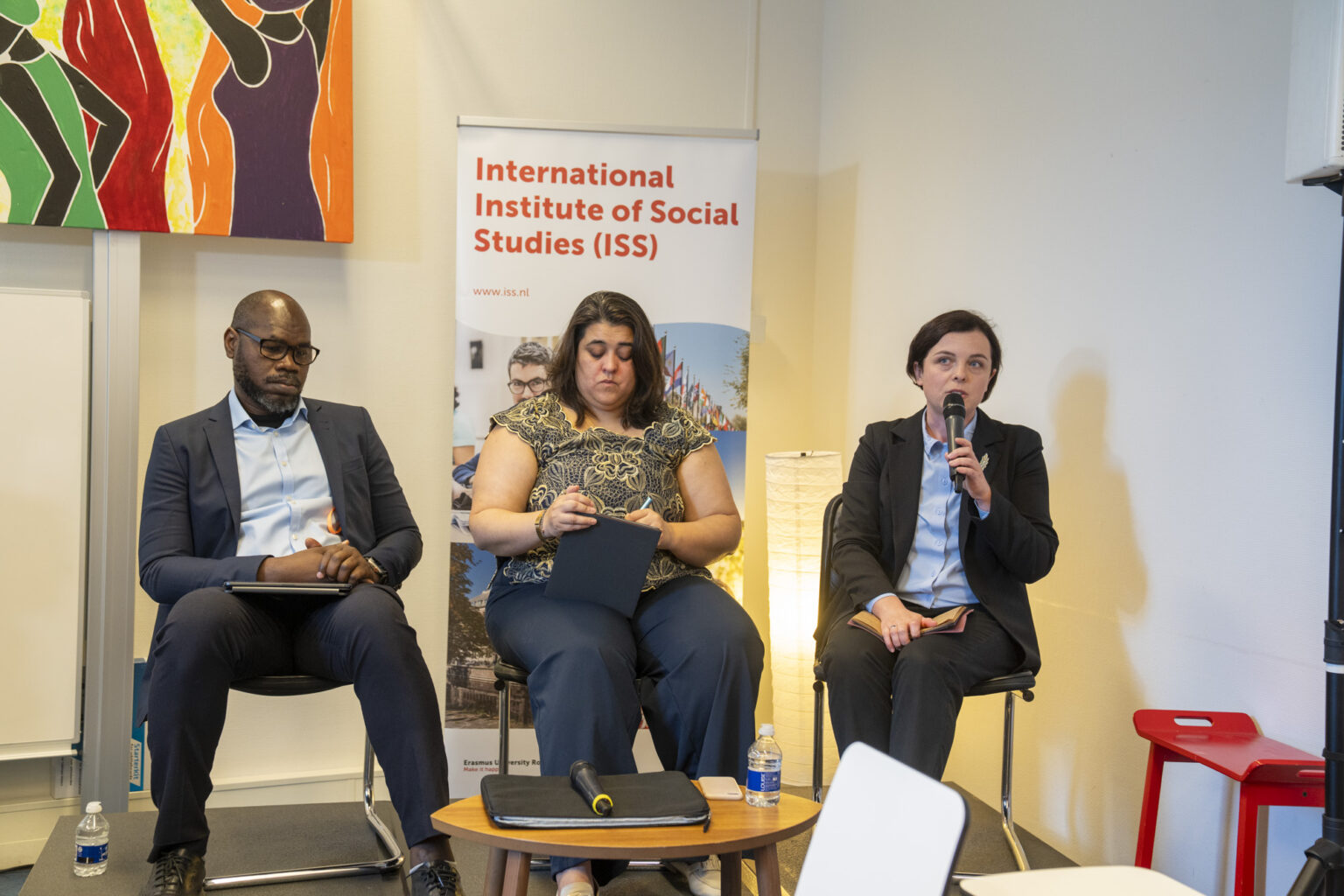
The Hague, September 30, 2025 – This panel explored feminist and survivor-led approaches to repairing gender-based violence, focusing on reparations as a mechanism of healing, accountability, and structural change. Moderated by Alix Vuillemin, Executive Director of Women’s Initiatives for Gender Justice, the discussion emphasised that reparations must be transformative rather than transactional and grounded in the lived realities of survivors.
Khrystyna Kit, Chairperson of the Ukrainian Women Lawyers Association “JURFEM”, described Ukraine’s efforts to integrate survivor-centred reparations into domestic law and policy amid ongoing conflict. She highlighted the adoption of legislation on interim reparations for survivors of conflict-related sexual violence, the growing role of survivor-led organisations, and the importance of linking reparations to justice at both national and international levels. Kit stressed that reparations encompass not only compensation, but also accountability, services, and meaningful participation in policymaking.
Jacqueline Mutere, survivor activist and Director of Grace Agenda, reflected on nearly two decades of survivor advocacy in Kenya, arguing that repair begins with public acknowledgement and dignity. She emphasised survivor agency, long-term psychosocial care, memorialisation, institutional reform, and inclusion of children born of rape. Mutere cautioned against extractive practices and box-ticking approaches, underscoring that reparations must be co-designed from conception to implementation.
Kolbassia Haoussou, survivor advocate and head of Survivors Speak Out, focused on creating safe, non-extractive spaces for survivor leadership. He outlined practical “do’s and don’ts” for institutions, stressing co-design, fair compensation, confidentiality, sustained engagement, and accountability. Survivors, he argued, must shape decisions rather than merely “be in the room.”
Deborah Ruiz Verduzco, Executive Director of the Trust Fund for Victims, discussed the Trust Fund for Victims’ efforts to operationalise gender-responsive reparations at scale within the ICC system. She highlighted lessons from programming across multiple contexts, the need to balance depth and reach, and emerging evidence on how reparations can rebuild trust, social cohesion, and institutional legitimacy. She emphasised collaboration, conflict-sensitivity, and clarity about what success in reparations should look like. The panel concluded that repairing gender-based violence requires long-term commitment, survivor leadership, and collective responsibility across justice ecosystems.
“Survivors must be subjects of the process, not instruments in our hands.” — Khrystyna Kit


